Overhanging Tree Branches From a Neighbour: Who Is Responsible in Scotland?


TD Trees • Neighbour & Boundary Trees

Overhanging Tree Branches From a Neighbour: Who Is Responsible in Scotland?

If a neighbour’s tree grows across your boundary, you can generally cut the branches or roots back to your property boundary.
However, that does not give you ownership of the tree, permission to enter your neighbour’s land or an unrestricted right to prune it however you choose.

Quick answer:
in Scotland, you can normally trim encroaching branches and roots back to the boundary from your own side. You should not cut beyond the boundary, enter the neighbour’s property without permission or carry out work that unlawfully affects a protected tree. For substantial branches or roots, professional advice is sensible because incorrect pruning can damage or destabilise the tree.

At TD Trees, we carry out professional pruning, tree inspections and arboricultural consultancy across Edinburgh, Central Scotland, Southern Scotland, the Scottish Borders and surrounding areas.

01

Your Boundary
Cut back only as far as your property boundary.

02

No Trespass
You need permission before entering the neighbour’s land.

03

Tree Protection
TPO and conservation-area controls still apply.

04

Avoid Damage
Do not turn reasonable pruning into damage to the tree.

05

Cuttings
Offer the cut branches back to the tree owner.

06

Large Work
Use an arborist where pruning could affect safety or stability.

The Practical Answer

Can I Cut My Neighbour’s Overhanging Tree Branches in Scotland?

Generally, yes — but only back to the property boundary.
Scottish Government guidance recognises the common-law right to cut branches that overhang onto your property. mygov.scot also confirms that branches and roots crossing your boundary can be trimmed back.

The important limit is the boundary itself. You do not acquire a right to reshape the neighbour’s entire tree simply because part of its crown extends into your garden.

The simplest rule:
deal only with the part that encroaches onto your side, stop at the legal boundary and check whether the proposed pruning could damage the tree or breach tree-protection controls.

Responsibility Explained

Who Is Responsible for Overhanging Branches?

There are really two different questions: who owns the tree and who can deal with branches that cross the boundary.

The Tree Owner

The tree remains the property of its owner. Overhanging branches do not transfer ownership of the tree to the neighbouring property.

The Affected Neighbour

You can generally exercise the right to cut encroaching branches or roots back to your own boundary, subject to protection and damage considerations.

If Damage Is Occurring

Responsibility becomes more significant where the tree is damaging property or presents an identifiable safety problem.

Citizens Advice Scotland states that a tree owner has a legal responsibility to make sure the tree does not damage a neighbour’s property, garden, drive or boundary fence.

The Boundary Matters

How Far Can You Legally Cut the Branches Back?

You can generally prune the encroaching growth up to the property boundary.

You should not continue cutting farther into the neighbour’s side simply because doing so would make the finished crown look neater or make the pruning easier.

Do not cross the line.
mygov.scot warns that if you trim beyond the property boundary, your neighbour could take action against you for damaging their property.

If the precise boundary itself is disputed, resolve that issue before undertaking substantial pruning. Scottish Government guidance recommends checking title deeds where the boundary is uncertain.

Boundary Disputes

What If Nobody Is Certain Where the Boundary Is?

This is worth resolving before anyone carries out major work. A fence, wall or hedge does not always tell the complete legal story.

Check title information
Homeowners can use their title deeds to help establish property boundaries.
Do not guess
Major pruning based on an assumed line can create a much larger neighbour dispute.
Get advice where necessary
Boundary disputes may require professional property or legal advice rather than arboricultural judgement alone.

Access Permission

Can You Enter Your Neighbour’s Garden to Cut the Branches?

Not without their permission. The right to deal with an overhang from your own property does not automatically give you a right to enter the neighbouring garden.

If safe access requires their land:
ask first and agree what access is required, who will carry out the work and when it will happen.

This is especially relevant with larger tree work. A tree surgeon may be able to complete the work entirely from your property, but in some situations access from the tree owner’s side can make the job safer or less damaging.

Quick Reference

Overhanging Branches: What You Can and Cannot Do

DODON’T
✓ Speak to your neighbour first where practical.✕ Assume you can cut down the whole tree.
✓ Confirm exactly where your boundary lies.✕ Cut beyond your property boundary.
✓ Check whether the tree is legally protected.✕ Enter the neighbour’s property without permission.
✓ Consider whether pruning could destabilise the tree.✕ Cut major structural roots casually.
✓ Offer cut branches back to the owner.✕ Throw unwanted cuttings over the boundary.
✓ Use an arborist for significant or technically difficult work.✕ Carry out unsafe work simply because the branch is on your side.

After Pruning

Who Owns the Branches After You Cut Them?

Scottish Government high-hedge guidance states that where you exercise the common-law right to cut overhanging branches, the cuttings should be offered to the owner.

If your neighbour has already given you permission to carry out the pruning, the official guidance notes that this offer is not necessary.

Practical approach:
tell your neighbour beforehand, ask whether they want the cut material and agree what will happen to it. If they do not want it, arrange appropriate disposal rather than simply throwing branches back over the fence.

Cost Responsibility

Who Pays to Cut Back an Overhanging Tree?

This is one of the most common sources of confusion. The fact that branches cross your boundary does not by itself create a simple automatic rule that the neighbour must pay for whatever pruning you want carried out.

Where you choose to exercise your right to cut encroaching branches back from your own side, the practical arrangement for paying for that work is often something to agree with your neighbour.

Routine Overhang

Discuss the work with the neighbour and agree who will organise and pay for it before contractors are instructed.

Actual Property Damage

If the tree has damaged property, questions about responsibility and recovery of costs can become legally more complex.

Known Hazard

Where an owner has been alerted to a genuine tree hazard, documentation and professional assessment can become particularly important.

If significant money or property damage is involved:
contact your insurer where appropriate and obtain legal advice rather than assuming that ordinary branch-pruning rules settle liability.

Damage & Liability

What If the Neighbour’s Tree Is Damaging My Property?

This is different from an ordinary nuisance caused by leaves or branches simply extending over the garden.

Citizens Advice Scotland states that a tree owner has a legal responsibility to make sure the tree does not damage neighbouring property, including a garden, drive or boundary fence.

✓ Photograph the affected area
✓ Record dates and changes
✓ Notify the neighbour clearly
✓ Keep copies of correspondence
✓ Seek arboricultural evidence if needed
✓ Contact your insurer where appropriate

Where there is disagreement about whether a tree caused structural damage, root damage or another significant loss, an arboricultural report may be useful alongside advice from an insurer, surveyor or solicitor.

Tree Roots

Can You Cut a Neighbour’s Tree Roots That Enter Your Garden?

mygov.scot and Citizens Advice Scotland both recognise that roots encroaching onto your property can generally be cut back to the boundary.

That does not mean cutting them is always sensible. Significant roots can contribute to the stability and health of the tree.

Roots require more caution than many homeowners realise.
Removing major structural roots could destabilise a mature tree or cause decline. Get professional advice before undertaking substantial root cutting.

If roots are allegedly damaging foundations, drains, paving or retaining structures, the correct response is often evidence-led investigation rather than simply severing every root at the boundary.

Protected Trees

What If the Neighbour’s Tree Has a TPO?

Your right to deal with an overhang does not allow you to ignore statutory tree protection.

If a Tree Preservation Order protects the tree, speak to the planning authority before carrying out the pruning. The fact that the branch happens to cross your boundary does not remove the protection applying to the tree.

Check before the saw comes out:
a protected tree may look exactly like an unprotected one. TPO status is a legal designation, not something you can determine simply by looking at the tree.

Conservation Areas

Does Living in a Conservation Area Change the Rules?

It can. Scottish Government guidance states that, subject to specified exemptions, a person proposing to cut down or carry out work to a tree in a conservation area must give the planning authority six weeks’ prior notice.

This gives the authority an opportunity to consider whether the tree should receive a Tree Preservation Order.

An overhanging branch is still part of the protected tree.
Do not assume that being on your side of the fence takes the branch outside conservation-area or TPO controls.

A Different Problem

What If the Problem Is the Height of the Tree Rather Than Overhanging Branches?

The common-law right to cut encroaching growth does not give you a general right to reduce the overall height of your neighbour’s tree.

Scottish Government high-hedge guidance specifically distinguishes between cutting overhanging branches and reducing height without the owner’s permission.

Branch crosses your boundary
You can generally deal with the encroaching section up to the boundary.
Tree is simply too tall
You cannot normally reduce your neighbour’s tree height without their agreement or another lawful basis.

High Hedges

Does the High Hedges (Scotland) Act Cover Overhanging Branches?

Not directly. Scottish Government guidance says the High Hedges (Scotland) Act 2013 deals with hedge height rather than overhanging branches or hedge width.

mygov.scot describes a qualifying high hedge as a row of two or more trees or shrubs that is over two metres high and blocks light. Single trees and ordinary overhanging branches are not covered by that process.

So choose the right route:
an overhanging branch dispute is normally a boundary/tree issue. A qualifying hedge substantially affecting light may potentially fall under the separate high-hedge procedure.

Light & Amenity

What If My Neighbour’s Tree Blocks Light but Does Not Overhang?

This is a different issue from encroachment. You cannot simply cross the boundary or reduce the neighbour’s tree because it blocks a view or reduces light.

The first step is usually to discuss the problem and see whether appropriate pruning can be agreed. If the problem involves a qualifying high hedge rather than a single tree, the Scottish high-hedge process may be relevant.

Avoid confusing three separate issues:
overhanging branches, excessive tree height and a qualifying high hedge are not legally identical problems.

Avoid Causing Damage

What Happens If Your Pruning Damages the Neighbour’s Tree?

The right to cut encroaching growth is not a licence to damage the neighbour’s property.

mygov.scot specifically warns that cutting beyond the boundary can expose you to action for damage. Citizens Advice Scotland also cautions that inappropriate cutting of roots or branches can damage the tree or make it dangerous.

✕ Removing major limbs indiscriminately
✕ Cutting substantial structural roots
✕ Leaving large poor-quality pruning wounds
✕ Creating a seriously unbalanced crown

For a mature tree, large limbs, significant root work or a tree already showing defects, it is usually sensible to have the proposed work assessed professionally.

Professional Tree Work

When Should You Use a Professional Arborist?

Light growth from a small tree is very different from a mature limb weighing hundreds of kilograms above a conservatory, greenhouse or neighbouring structure.

✓ Large mature limbs
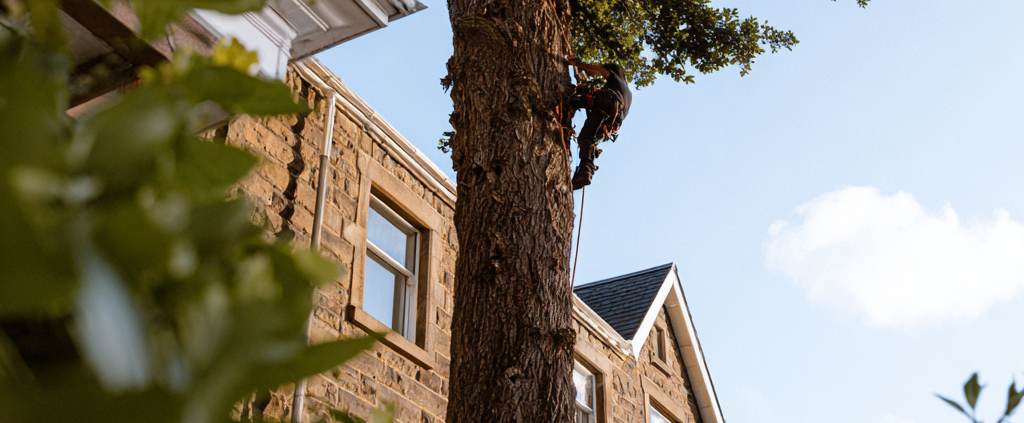
✓ Branches above buildings
✓ Tree beside a road
✓ Significant root cutting
✓ Suspected decay
✓ Protected-tree uncertainty
✓ Difficult access
✓ Ongoing neighbour dispute

TD Trees provides professional tree pruning services where careful reduction or branch removal is required.

When Evidence Matters

When Is a Tree Report Worth Having?

Many routine pruning jobs do not need a formal written report. A report becomes more useful when the dispute is really about condition, risk or alleged damage rather than simply an inconvenient branch.

Tree alleged to be dangerous
An assessment can document visible condition and management recommendations.
Property damage dispute
Arboricultural evidence may help distinguish tree-related issues from other possible causes.
Formal neighbour dispute
A written professional opinion can provide a factual basis for discussion, insurers or advisers.

TD Trees provides professional tree reports and surveys where a more formal assessment is appropriate.

Prevent the Dispute Escalating

The Best First Step Is Usually to Speak to Your Neighbour

Having the legal right to prune back to the boundary does not necessarily mean you should surprise your neighbour by doing it without warning.

Scottish Government and Citizens Advice guidance both encourage neighbours to discuss these issues first.

1. Explain which branches are causing the problem.
2. Explain what work you propose.
3. Agree access if their garden is needed.
4. Discuss who will arrange the arborist.
5. Agree what happens to the branches.
6. Put important agreements in writing.

Where a verbal conversation is unsuccessful, mygov.scot suggests writing to the neighbour, explaining the issue clearly and keeping a copy.

If You Cannot Agree

What If Your Neighbour Refuses to Discuss the Tree?

If direct discussion does not work, the next step depends on the actual problem.

Ordinary Overhang

You may still be able to prune encroaching growth from your own land within the legal limits.

Neighbour Dispute

Mediation can help where communication has broken down but both sides want a practical resolution.

Damage or Legal Dispute

A solicitor can advise where liability, compensation, title boundaries or court action are becoming relevant.

Different Situation

What If the Branches Overhang a Road or Public Footpath?

That is different from an ordinary private neighbour boundary issue because highway and public-access responsibilities can come into play.

A tree owner can be required to deal with growth that creates a danger or obstruction to a public road or path.

We cover that situation separately in our guide to trees near roads and footpaths and homeowner responsibilities.

Before Cutting Anything

Neighbour Tree Branch Checklist

Work through these checks before arranging pruning.

✓ I know where the legal boundary is
✓ I have spoken to the neighbour
✓ I am only proposing work on my side
✓ I have checked for a TPO
✓ I have checked conservation-area status
✓ I do not need to enter their garden without permission
✓ The work will not destabilise the tree
✓ We have discussed the cut branches
✓ Large work will be done by a competent arborist
✓ Any damage issue has been properly documented

Common Questions

FAQs About Neighbours’ Overhanging Trees in Scotland

Can I cut my neighbour’s branches back in Scotland?

Generally yes, where branches encroach onto your property, but only back to your legal boundary and subject to tree-protection controls.

Do I need my neighbour’s permission?

You do not generally need permission to cut encroaching growth from your own side up to the boundary, but discussing the work first is strongly recommended.

Can I enter their garden to cut the tree?

Not without permission. mygov.scot states that you can only enter a neighbour’s property to trim branches with their permission.

Can I cut branches beyond the fence?

Only if the fence accurately represents the legal boundary. Your pruning right extends to the property boundary, not automatically to whatever physical feature happens to be present.

Can I reduce the height of my neighbour’s tree?

Not simply because branches overhang. Scottish Government guidance distinguishes cutting back overhang from reducing the tree’s height without the owner’s permission.

Who pays to prune the branches?

Routine overhang does not create a simple automatic payment rule. Discuss who will arrange and fund the work before instructing a contractor.

Do I have to return the cut branches?

Scottish Government guidance says cuttings should be offered to the owner when you exercise the common-law right to remove overhanging branches.

Can I throw the branches back over the fence?

The sensible approach is to offer them to the owner and agree what happens next. If they do not want them, arrange suitable disposal instead.

Can I cut my neighbour’s tree roots?

Roots encroaching onto your land can generally be cut back to the boundary, but significant root cutting can destabilise or damage the tree and should be approached carefully.

What if the tree has a TPO?

Check with the planning authority before pruning. Your normal boundary rights do not override statutory tree protection.

What if the tree is in a conservation area?

Relevant tree work generally requires six weeks’ prior notice to the planning authority, subject to the applicable exemptions.

Can my neighbour stop me cutting overhanging branches?

Your common-law right generally allows you to deal with encroaching growth on your side, but protected-tree rules, boundary uncertainty and the risk of tree damage can affect what is lawful or sensible.

What if their tree is damaging my fence or driveway?

Document the problem and notify the owner. If significant damage or disputed liability is involved, professional and legal advice may be appropriate.

What if I damage the tree while pruning it?

You could create a dispute or potential liability. Do not prune beyond the boundary or undertake technically harmful work simply because part of the crown is above your land.

Can I cut the whole tree down?

Not unless you have the owner’s authority or another clear lawful basis. The right to deal with an overhang is not a right to remove somebody else’s tree.

Does the High Hedges Act apply to one tree?

No. The Scottish high-hedge process does not cover a single tree and does not directly deal with ordinary overhanging branches.

What if my neighbour refuses access to their garden?

Do not simply enter. Consider whether the work can be completed from your own land or discuss alternative arrangements with the owner.

When should I get a professional tree report?

A report can be valuable where the dispute concerns tree safety, condition, property damage, major roots or a formal disagreement requiring objective evidence.

Professional Tree Advice

Need Overhanging Branches Assessed or Professionally Pruned?

If a neighbour’s tree is overhanging your property, TD Trees can assess the practical tree-work options and carry out professional pruning where appropriate.

For more complex situations involving tree condition, suspected damage, significant roots or a formal neighbour dispute, our consultancy team can also provide professional tree surveys and reports.


Contact TD Trees

Sources and References

  • mygov.scot – Resolve a Boundary Dispute:
    https://www.mygov.scot/boundary-disputes
  • Citizens Advice Scotland – Boundary and Garden Disputes:
    https://www.citizensadvice.org.uk/scotland/housing/neighbour-disputes-s/boundary-and-garden-disputes/
  • Scottish Government – High Hedges (Scotland) Act 2013 Revised Guidance:
    https://www.gov.scot/publications/high-hedges-scotland-act-2013-revised-guidance-local-authorities-2019/
  • mygov.scot – High Hedge Disputes:
    https://www.mygov.scot/high-hedge-disputes
  • Scottish Government – Guide to Conservation Areas in Scotland:
    https://www.gov.scot/publications/guide-to-conservation-areas-in-scotland/
  • Scottish Government – Tree Preservation Orders:
    https://www.gov.scot/publications/scottish-planning-series-planning-circular-1-2011-tree-preservation-orders/

Tree Surgery Cost Scotland: What Affects the Price?


TD Trees • Tree Surgery Costs

How Much Does Tree Surgery Cost in Scotland?

There is no single standard price for professional tree surgery in Scotland.
The cost depends on the tree, the work required, access, surrounding property, equipment, tree condition and what happens to the timber and stump afterwards.

Quick answer:
a straightforward pruning job on an accessible tree is completely different from dismantling a large tree above a house, road or conservatory. The most accurate way to establish the cost is to assess the actual tree and site rather than relying on a generic online price.

At TD Trees, we provide professional arboricultural services across Edinburgh, Central Scotland, Southern Scotland, the Scottish Borders and surrounding areas.

01

Tree Size
Height, crown spread, trunk diameter and timber weight.

02

Access
Narrow gates, steps and long gardens can increase labour.

03

Work Type
Pruning, reduction and removal require different methods.

04

Surroundings
Buildings, roads and services can increase complexity.

05

Equipment
Some jobs require specialist rigging, platforms or cranes.

Tree Surgery Pricing Explained

How Much Does a Tree Surgeon Cost in Scotland?

The most useful answer is that tree surgery should be priced according to the individual tree and job rather than from a flat price list.

Two trees of a similar height can require completely different amounts of work. One may stand in open ground with vehicle access beside it. Another may sit between a house, neighbouring garden, conservatory and public footpath.

Even if both ultimately need removing, the second tree can require considerably more labour, controlled rigging, equipment and site protection.

The main things affecting the quote are:
tree size, condition, work type, access, nearby buildings and services, specialist machinery, waste handling, stump treatment and whether the job is planned or urgent.

Photographs can help with an initial discussion, but they may not show access routes, slopes, overhead services or the working area beneath the tree. Those details can all change how the job is carried out.

At a Glance

What Affects Tree Surgery Costs?

Tree height matters, but it is only one part of a professional quotation.

Cost FactorWhy It MattersTypical Effect
Tree sizeLarger crowns and thicker trunks mean more timber, weight and working time.More labour and processing.
Type of workDeadwood removal, crown reduction and complete removal require different techniques.Major cost variable.
AccessPoor access can prevent machinery getting close to the tree.More manual handling.
Nearby propertyRoofs, roads and fences reduce the available drop zone.May require controlled rigging.
Tree conditionDecay, cavities and storm damage can change the safe working method.Additional controls may be needed.
MachineryPlatforms, cranes or specialist equipment may be required.Can increase cost but improve efficiency.
Waste and timberBranches and timber must be processed, moved or removed.Adds clearance time.
Stump grindingFelling does not automatically remove the stump below ground.Normally a separate operation.

Same Height. Different Job.

Why Similar Trees Can Have Very Different Prices

1

Tree Size and Weight

Larger crowns, thicker trunks and heavier timber generally mean more climbing, cutting and processing.

2

Restricted Access

Narrow gates, steps, walls or long rear gardens can prevent equipment reaching the working area.

3

What Is Below the Tree

Roofs, vehicles, roads and neighbouring gardens can require branches to be carefully lowered.

Simple principle:
the more control required over where branches and timber can move, the more technically demanding the work becomes.

Work Specification

Pruning, Crown Reduction or Complete Removal?

The type of work required can make a major difference to both the method and the quotation.

✓ Deadwood removal
✓ Crown lifting
✓ Crown thinning
✓ Crown reduction
✓ Hazardous branch removal
✓ Formative pruning
✓ Sectional dismantling
✓ Straight felling
✓ Stump grinding

Where retaining the tree is appropriate, professional tree pruning can address clearance, structure or management issues without removing the tree completely.

Job Comparison

Which Tree Surgery Jobs Are More Complex?

This shows relative complexity rather than using misleading fixed prices.

Example JobComplexityMain Reasons
Small-tree pruningLowerLess material and simpler access.
Mature crown reductionMedium–HighMore climbing and detailed pruning.
Straight felling in open groundMediumRequires suitable controlled felling space.
Sectional dismantling near buildingsHighSections may need individual control and lowering.
Large technical removalVery HighCan involve specialist rigging, platforms or cranes.

Removal Methods

Straight Felling vs Sectional Dismantling

Straight Felling

Where enough open space exists, a tree may be suitable for controlled directional felling in one piece.

Sectional Dismantling

Trees beside houses, roads or neighbouring property may need to be removed gradually.

Technical Rigging

Branches and trunk sections can be controlled using specialist ropes and rigging systems.

Find out more on our tree felling services page.

Often Underestimated

How Access Changes the Price

Access is one of the easiest factors to underestimate. A tree may look straightforward until you consider how equipment reaches it and how timber gets back out.

Tell us about:

✓ Narrow gates
✓ Steps
✓ Long rear gardens
✓ Steep ground
✓ Parking restrictions
✓ Shared access

If every branch and section of timber must be manually moved from the back of a property to a vehicle at the front, clearance can become a significant part of the work.

Higher Complexity

What Makes Tree Surgery More Expensive?

Restricted Drop Zone

Branches above roofs, greenhouses, roads or vehicles may require controlled lowering.

Tree Defects

Decay, deadwood or storm damage can change how the tree can safely be accessed.

Specialist Machinery

Some jobs may require a platform, crane, specialist rigging or larger machinery.

The key point:
professional tree surgery is priced around completing the work safely and efficiently, not simply the number of cuts made.

Tree Condition

Does the Condition of the Tree Affect the Quote?

Healthy Tree

A structurally sound tree may provide more predictable climbing and rigging options.

Dead or Damaged Tree

Decay, brittle timber or unstable branches can require a different access method or extra controls.

Visible size does not tell the whole story. Structural defects can affect whether parts of the tree can safely support a climber or rigging system.

More Than Chainsaws

Specialist Machinery and Equipment

✓ Woodchippers
✓ Stump grinders
✓ Rigging systems
✓ Mobile platforms
✓ Cranes
✓ Timber-handling equipment
✓ Ground protection
✓ Specialist vehicles
Specialist machinery can add direct cost, but it can also make certain operations safer and significantly more efficient.

After Felling

Is Stump Removal Included in Tree Felling?

Not automatically.

Once the tree has been felled, the stump and root system remain unless stump treatment has also been agreed.

When comparing quotes:
one may include stump grinding while another covers only removal of the tree above ground.

TD Trees uses specialist equipment for stump removal and grinding. The required depth depends partly on how the area will be used afterwards.

Site Clearance

What Happens to Branches, Woodchip and Timber?

Tree work can produce a surprisingly large volume of material. Your quotation should make clear what happens to it.

Material Removed

Branches can be chipped and timber processed before being transported away.

Material Retained

Suitable logs or woodchip can sometimes remain on site if agreed in advance.

Professional Tree Work

What Are You Paying for With a Professional Tree Surgeon?

Customers naturally see the climbing and cutting, but a professional tree surgery business has considerable expertise, equipment and planning behind every job.

Qualified staff
Experienced arborists completing specialist work.
Climbing equipment
Professional access and work-positioning systems.
Rigging equipment
Controlled handling of branches and timber.
Vehicles & chippers
Equipment for processing and moving material.
Insurance
Professional protection appropriate to the work.
Job planning
Assessment of access, hazards and working methods.
The cheapest method is not automatically the correct method.
Professional tree surgery is about controlling risk to people, property and the tree itself.

Before Work Starts

Do Permissions Affect Tree Surgery in Scotland?

They can affect the administration and timing of a job.

Tree Preservation Orders

Work to a protected tree can require consent from the relevant planning authority.

Conservation Areas

Qualifying tree work in a conservation area generally requires prior notice to the planning authority.

Felling Permission

Scottish Forestry controls can apply to felling unless a relevant exemption applies.

Do not assume that owning the tree means any work can automatically go ahead.
Relevant planning and forestry controls should be checked first.

Storm & Emergency Work

Emergency Tree Work Can Be Different

A storm-damaged or failed tree may require a different approach from routine planned maintenance.

✓ Tree blocking access
✓ Tree against a building
✓ Suspended broken branches
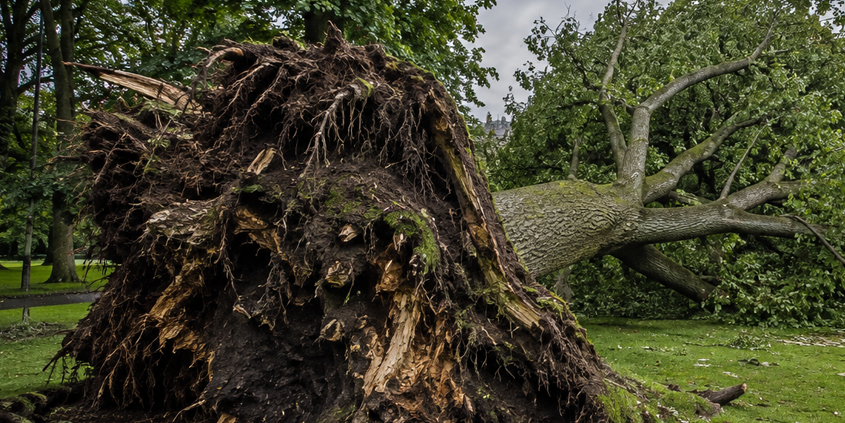
✓ Partially uprooted tree
✓ Road obstruction
✓ Unstable storm damage
If a tree appears immediately dangerous:
keep people away from the affected area and do not stand beneath unstable branches or attempt to move damaged material yourself.

Compare Like for Like

What Should a Tree Surgery Quote Include?

Two quotes are only comparable if they cover the same work.

✓ Which trees are included
✓ Exact pruning or removal work
✓ Timber removal
✓ Woodchip treatment
✓ Stump grinding
✓ Access assumptions
✓ Specialist machinery
✓ Permission requirements
✓ VAT position where applicable
Cheaper quote or different job?
One contractor may quote to fell the tree and leave the timber. Another may include controlled dismantling, full clearance and stump grinding.

Getting a Quote

Can a Tree Surgeon Quote From Photos?

Photographs can be useful for an initial discussion, especially when they show the entire tree and surrounding site.

Show the Whole Tree

Include the complete crown as well as the trunk and base.

Show the Access

Include gates, passages, steps and the route to the road.

Show the Surroundings

Include nearby roofs, roads, fences and overhead services.

Planning Ahead

How Can You Avoid Unnecessary Tree Surgery Costs?

Plan Before It Becomes Urgent

Routine management gives you more options than waiting until a tree becomes an emergency.

Combine Suitable Work

If several trees need attention, ask for them to be assessed together.

Decide What Stays

Decide whether timber, woodchip and the stump need removing before the work is priced.

Make Quoting Easier

What Information Should I Send?

✓ Your postcode
✓ Number of trees
✓ What you want to achieve
✓ Pruning or removal
✓ Photos of the whole tree
✓ Photos of the tree base
✓ Nearby buildings or roads
✓ Access restrictions
✓ Whether timber should be removed
✓ Whether stump grinding is required

TD Trees Approach

Why We Do Not Use a One-Price-Fits-All Tariff

Trees are living structures growing in very different environments. No two sites are exactly the same.

A generic online price based only on height can ignore access, condition, nearby property, equipment requirements and the amount of material that must be processed.

We would rather assess what is actually required and quote for the real job.

Professional tree surgery from TD Trees
We work with domestic, commercial and public-sector clients and undertake everything from routine pruning to technically demanding removals.

Common Questions

Frequently Asked Questions About Tree Surgery Costs

How much does tree surgery cost in Scotland?

There is no reliable single figure. Tree size, access, work required, equipment and waste removal all affect the quotation.

Is pruning cheaper than removing a tree?

Often, but not always. A difficult crown reduction can involve considerable climbing and rigging.

Does a bigger tree always cost more?

Larger trees usually create more work, but access and nearby buildings can be equally important.

Why does poor access increase the cost?

Poor access can prevent machinery reaching the tree and increase manual handling.

Does tree felling include stump removal?

Not automatically. Stump grinding should be specifically included if required.

Can I keep logs or woodchip?

Often, yes. Tell the contractor before the work is priced.

Can protected trees affect the job?

Yes. Consent or prior notification may be required before certain work begins.

Do I need permission to cut down a tree?

It depends on the circumstances. Forestry controls, TPOs and conservation-area requirements can all be relevant.

Can emergency tree work cost more?

It can involve urgent mobilisation, unstable material and additional controls.

Can a tree surgeon quote from photos?

Photos help initially, but some jobs still require an on-site assessment.

Why would a crane be used?

A crane can be suitable where large sections need controlled lifting.

What should I compare between quotes?

Compare the exact work, clearance, stump treatment, equipment and permissions—not only the total.

Free No-Obligation Quotation

Get an Accurate Tree Surgery Quote

The most reliable way to find out what your tree work will cost is to have the actual tree and site assessed.

TD Trees provides professional pruning, tree removal, stump grinding, surveying and specialist arboricultural services across Edinburgh, Central Scotland, Southern Scotland, the Scottish Borders and surrounding areas.

Tell us about the tree, where it is and what you would like to achieve and we can advise on the next step.


Contact TD Trees

Sources and References

  • Scottish Forestry – https://www.forestry.gov.scot/apply-fell-trees
  • Scottish Government – https://www.gov.scot/publications/guide-to-conservation-areas-in-scotland/
  • British Standards Institution – BS 3998 Tree Work – Recommendations
  • TD Trees – https://www.tdtrees.co.uk/tree-services/felling/
  • TD Trees – https://www.tdtrees.co.uk/tree-services/pruning/

© Copyright – TD Trees | Privacy Policy